Georden Jones, Founder, The Peer Review · Last updated: August 9, 2026
The Short Answer
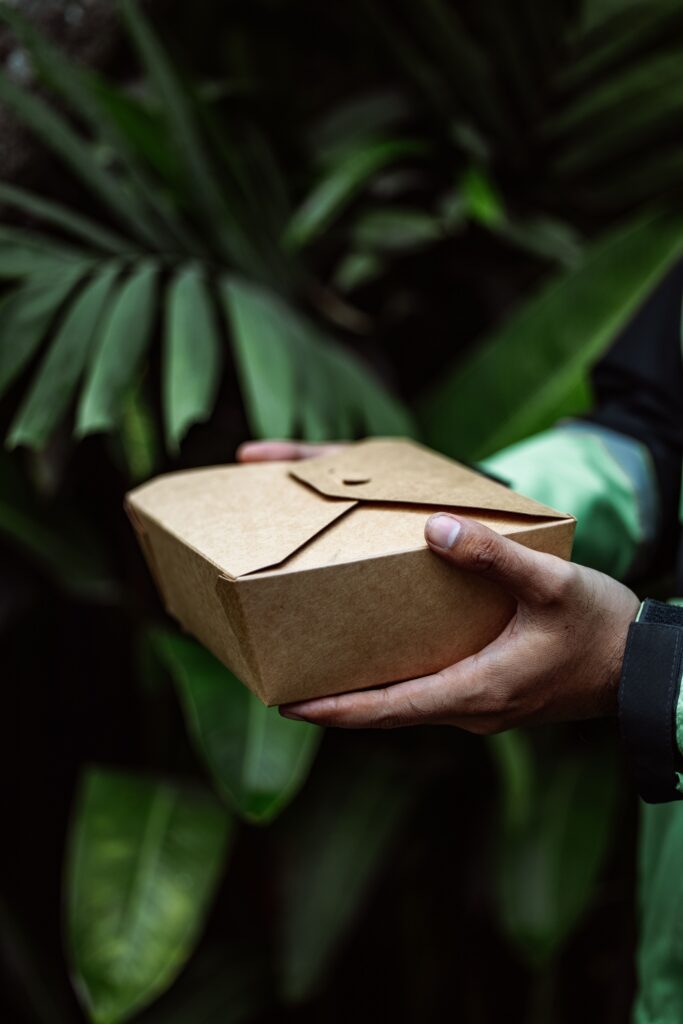
“Plastic-free” packaging sounds like an automatic win, but it hides one of the most counter-intuitive facts in this whole series: many “compostable” and “plastic-free” food containers contain PFAS, the “forever chemicals,” added to make paper and moulded fibre resist grease and moisture [1][2]. Those trendy fibre bowls at fast-casual chains, bagasse plates, and grease-resistant wrappers are frequently treated with PFAS, and testing has found high fluorine levels in moulded-fibre food packaging [1][2]. So “plastic-free” is not the same as “chemical-free.” The truly low-concern plastic-free options are the simple, inert ones: glass and plain, uncoated paper or cardboard. Grease- and water-resistant moulded fibre is the trap. Because the category spans both safe and PFAS-laden products, it earns a Mixed Signals rating: read what the packaging is coated with, not just what it is made of.
Quick Answer: Is “Plastic-Free” Packaging Safer?
- Truly safe: glass and plain, uncoated paper/cardboard, inert, low-concern.
- The catch: grease-resistant moulded-fibre/bagasse and many “compostable” bowls contain PFAS; “plastic-free/compostable” ≠ PFAS-free [1][2].
- How it reaches you: PFAS migrates from the coating into food, then you eat it [2].
- Evidence Rating: Mixed Signals. The category ranges from truly inert (glass, plain paper) to PFAS-treated fibre; safety depends on the coating, not the “plastic-free” claim.
Table of Contents
- Why “Plastic-Free” Feels Safe (and Isn’t Always)
- The Big Catch: PFAS in “Compostable” Fibre Packaging
- What Really Counts as Safer Plastic-Free Packaging
- How PFAS Reaches Your Body From Packaging
- “Compostable” Has an Environmental Twist, Too
- How to Choose Safer Packaging
- FAQ
- The Bottom Line
- References
Why “Plastic-Free” Feels Safe (and Isn’t Always)
“Plastic-free” and “compostable” trigger the same instinct as “natural”: that avoiding the obvious villain (plastic) must make something safe. But packaging safety is not about the base material alone; it is about what is coated onto it to make it work. Paper and moulded fibre are not naturally grease- and water-resistant, so to hold a burrito bowl or a hot, oily meal, they are often treated with a barrier coating, and for years that coating has frequently been PFAS [1][2].
This is the packaging version of the naturalistic fallacy: the label describes what the container is not (plastic), while saying nothing about the chemistry that was added to it. As with everything in the Safer Materials series, the honest question is what can migrate into your food, not what the marketing avoids naming.
The Big Catch: PFAS in “Compostable” Fibre Packaging
Here is the fact that surprises people: a great deal of “eco,” “compostable,” and “plastic-free” moulded-fibre and bagasse food packaging is treated with PFAS to resist oil and moisture [1][2]. Investigations found that the “compostable” fibre bowls used by popular fast-casual chains were made with PFAS, and testing of moulded-fibre products found an average of around 1,670 ppm of fluorine, a marker of PFAS treatment [1][2]. In plain terms: if a food container is moulded fibre or bagasse and needs to resist grease, it most likely contains PFAS unless it explicitly says otherwise [1].
That matters because PFAS are persistent “forever chemicals” linked to health effects including increased cancer risk and immune effects, and food packaging is a direct route of exposure [2]. So the very products marketed as the responsible, plastic-free choice can deliver PFAS straight into your meal, the opposite of what the label implies.
What Really Counts as Safer Plastic-Free Packaging
Not all plastic-free packaging is a trap. The simple, uncoated, inert options are clearly better:
- Glass: inert and endlessly reusable; the gold standard for food contact (see Glass).
- Plain, uncoated paper and cardboard: for dry goods, a low-concern choice.
- Stainless steel: for reusable containers (Stainless Steel).
- PFAS-free certified fibre: a growing category; newer barrier coatings use materials like shellac or cellulose-nanofibre instead of PFAS, and some products now carry explicit “PFAS-free” certification [1].
The trap is specifically grease- and water-resistant moulded fibre/bagasse without a PFAS-free guarantee. The material is not the problem; the fluorinated coating is.
How PFAS Reaches Your Body From Packaging
The route is ingestion. When PFAS-treated packaging holds food (especially hot, greasy, or moist food), some of the PFAS migrates from the coating into the food, and you eat it [2]. Hot and oily foods (exactly what these grease-resistant containers are designed for) tend to draw out more, which is an unfortunate match between the products most likely to be PFAS-coated and the conditions that increase migration.
Because the exposure comes from the coating, the fix is to avoid the coating: choose inert glass or stainless for reusables, plain uncoated paper for dry items, and explicitly PFAS-free products when you need grease resistance. This is a straightforward Hazard vs. Risk case: remove the source and the exposure drops.
“Compostable” Has an Environmental Twist, Too
The problem is not only about your food. When PFAS-treated “compostable” packaging is in fact composted, the PFAS contaminates the finished compost and, through it, soil and water, so the “compostable” claim can spread forever chemicals into the environment rather than breaking down cleanly [1][2]. And “compostable” usually means industrially compostable, requiring facilities most people do not have access to, so much of it ends up in landfill anyway.
None of this means composting or fibre packaging is bad in principle. It means “compostable” is an environmental claim about end-of-life, not a safety claim about chemistry, and the two get conflated.
How to Choose Safer Packaging
- Default to glass and stainless for anything reusable.
- Use plain, uncoated paper/cardboard for dry goods; it is a low-concern plastic-free option.
- Treat grease-resistant moulded fibre/bagasse as likely PFAS unless it is explicitly certified PFAS-free [1][2].
- Look for “PFAS-free” by name: the absence of “plastic” tells you nothing about fluorinated coatings [1].
- Don’t over-trust “compostable.” It is an end-of-life claim, not a safety one, and PFAS-treated compostables harm compost too [1][2].
FAQ
Does “plastic-free” packaging contain chemicals?
It can. “Plastic-free” describes the base material, not the coating, and grease-resistant paper and moulded fibre are often treated with PFAS to repel oil and water [1][2]. Glass and plain uncoated paper are the low-concern plastic-free options.
Do compostable bowls contain PFAS?
Frequently, yes. Investigations and testing found PFAS in “compostable” moulded-fibre and bagasse food packaging, including bowls from well-known chains [1][2]. Look for explicitly PFAS-free products.
Why is PFAS in food packaging a problem?
PFAS are persistent “forever chemicals” linked to health effects including cancer and immune impacts, and packaging lets them migrate into your food, a direct exposure route [2]. See PFAS.
Is compostable packaging bad for the environment then?
Not inherently, but PFAS-treated “compostable” packaging contaminates compost with forever chemicals, and most compostables need industrial facilities to break down [1][2]. “Compostable” is an end-of-life claim, not a chemical-safety one.
What packaging is truly safer?
Inert, uncoated materials: glass and stainless for reusables, plain uncoated paper/cardboard for dry goods, and explicitly PFAS-free fibre when you need grease resistance [1].
The Bottom Line
“Plastic-free” packaging is only as safe as what it is coated with, and that is the twist people miss: many “compostable,” “eco,” and “plastic-free” moulded-fibre and bagasse food containers contain PFAS, added for grease and moisture resistance and confirmed by testing [1][2]. Those forever chemicals migrate into hot, oily food and, later, into compost and the environment. The truly safer plastic-free choices are the simple inert ones: glass, stainless, and plain uncoated paper, plus fibre products explicitly certified PFAS-free. Read the coating, not the “plastic-free” claim, and this category stops being a trap.
Stay curious, stay critical.
Georden
References
- “Molded Fiber Food Packaging with PFAS: Is It Safe and Compostable? (fluorine testing, coatings, PFAS-free alternatives).” Imperial Dade.
- “The ‘compostable’ bowls at fast-casual chains are made with PFAS.” The Counter.
- “PFAS-free, food-grade, grease-resistant coatings for moulded pulp products (shellac / cellulose-nanofibre alternatives).” ScienceDirect.
Georden Jones is the founder of The Peer Review. Read the full story.