Georden Jones, Founder, The Peer Review · Last updated: July 21, 2026
The Short Answer
Formaldehyde is a colourless gas that is a well-established human carcinogen, but the risk to you depends almost entirely on how you are exposed, and to how much. The strong evidence for cancer comes from breathing it in at high levels over years, mainly in workplaces [1][2]. In personal care, it shows up two ways: as a gas released by heated hair-smoothing (keratin) treatments, which is the high-exposure consumer scenario, and as tiny amounts released by preservatives in products like shampoo and body wash, where the more realistic concern is skin allergy, not cancer [3][4]. It is also a normal part of indoor air and even forms naturally in your own body. This page separates the well-established hazard from the everyday risk, shows where formaldehyde hides and how it gets into your body, and gives you a realistic way to lower your exposure.
Evidence Rating: Strong Consensus. That formaldehyde is a human carcinogen and a respiratory and skin irritant is settled science: the International Agency for Research on Cancer classifies it as a Group 1 (known human) carcinogen [1][2]. What is not a single verdict is the risk from any given product: chronic high-level inhalation is the established danger, while a trace preservative in a rinse-off shampoo is a very different exposure. The rating reflects the strength of the hazard evidence; the body of this page handles the risk gradient.
Table of Contents
- Identify: What Formaldehyde Is and Why People Ask
- Where Formaldehyde Hides
- How Formaldehyde Gets Into Your Body
- Investigate: What the Evidence Shows
- The Hidden-Name Problem
- What Canada, the US, and the EU Restrict
- Inform: What This Means for You
- Improve: How to Lower Your Exposure Without Panic
- What This Doesn’t Mean
- FAQ
- The Bottom Line
- References
Identify: What Formaldehyde Is and Why People Ask
Formaldehyde is a simple, colourless gas with a sharp smell, used widely in industry to make resins, building materials, and preservatives. In everyday life it does two jobs worth knowing about: it kills microbes (which is why it turns up in preservative systems) and it helps set proteins in place (which is why it appears in hair-smoothing treatments) [3][4].
The reason it draws so much concern is not marketing hype: it is one of the few cosmetic-adjacent ingredients with a clear, top-tier cancer classification behind it. The International Agency for Research on Cancer lists formaldehyde as a Group 1 carcinogen, its highest category, meaning there is sufficient evidence it causes cancer in humans [1][2].
But a hazard classification describes what a substance can do under some conditions, not what a specific product will do to you: the distinction at the heart of our Hazard vs. Risk guide. Formaldehyde is a strong example of why that difference matters: the same molecule is a serious occupational carcinogen, a common cause of skin allergy, and a substance your own body produces in small amounts as part of normal metabolism. Sorting those apart is the whole job here.
Where Formaldehyde Hides
Formaldehyde and formaldehyde-releasing preservatives turn up across a wide range of products and materials. Roughly 20% of personal care products have been found to contain formaldehyde releasers [4]. Here is where it most often hides:
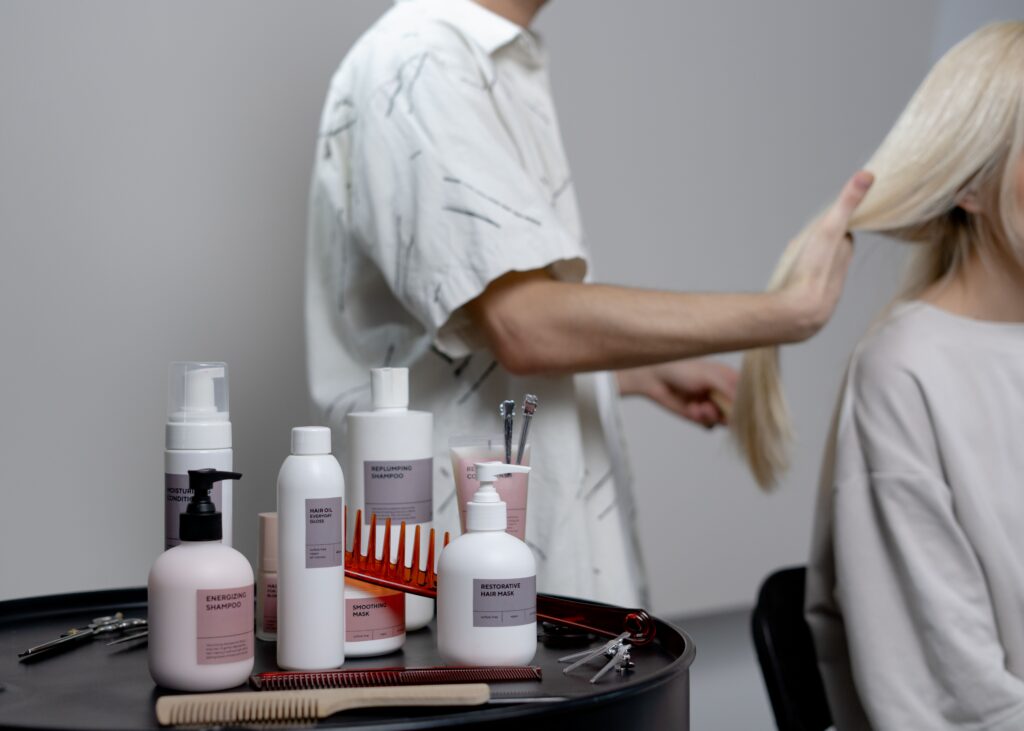
- Hair-smoothing and keratin treatments: these can release formaldehyde gas when the hair is blow-dried or flat-ironed, which is the highest-exposure cosmetic use, especially for salon workers [3][6].
- Formaldehyde-releasing preservatives in personal care: ingredients like DMDM hydantoin, quaternium-15, imidazolidinyl urea, diazolidinyl urea, sodium hydroxymethylglycinate, and bronopol slowly release small amounts of formaldehyde to keep water-based products from growing microbes. They appear in shampoo, body wash, hair gel, and even some baby washes and lotions [4].
- Nail products: some nail hardeners and polishes use formaldehyde or its releasers.
- Eyelash glue and adhesives: another common personal care source.
- Pressed-wood furniture and building materials: particleboard, plywood, MDF, and some flooring off-gas formaldehyde from their resins, making indoor air a major everyday source.
- Tobacco smoke and combustion: cigarettes, gas stoves, and open flames all release formaldehyde into indoor air.
- Some foods, naturally: formaldehyde occurs at low natural levels in fruits like apples and pears, and forms in the body during normal metabolism, a useful reminder that “contains formaldehyde” is not automatically alarming at trace levels [2].
How Formaldehyde Gets Into Your Body
Formaldehyde enters the body mainly by inhalation, with skin contact a distant second and ingestion largely a non-issue at everyday levels, and that ranking is the key to understanding its risk [1][2].
- Inhalation (the route that carries the cancer risk). Because formaldehyde is a gas, breathing it in is the exposure that matters most. This is why the strongest cancer evidence comes from workers who inhaled it for years, and why heated hair treatments and off-gassing furniture are the consumer sources worth taking seriously [1][6].
- Skin contact (the route behind allergy). Formaldehyde and its releasers touch your skin through leave-on and rinse-off products. Here the main documented consumer effect is not cancer but allergic contact dermatitis: formaldehyde is one of the more common skin sensitizers, and reactions can appear at low concentrations [4].
- Ingestion (minor at normal exposure). Small natural amounts in food are broken down quickly; formaldehyde does not accumulate, because the body metabolizes it rapidly into formate and eventually carbon dioxide [2].
The reason formaldehyde is not more dangerous than its scary reputation suggests, at everyday levels, is that fast breakdown: it does not build up in tissues over time. The reason it is not harmless is that repeated, high-level inhalation delivers ongoing local damage to the cells lining the nose, throat, and airways faster than the body clears it [1][2].
Investigate: What the Evidence Shows
The cancer evidence is strong for high-level inhalation and much weaker (closer to absent) for trace consumer exposure, so precision matters.
The well-established part: IARC classifies formaldehyde as a Group 1 human carcinogen, based on sufficient evidence that it causes nasopharyngeal cancer (a cancer of the upper throat behind the nose) and leukemia [1][2]. A meta-analysis of occupational studies found a raised leukemia risk among workers with significant formaldehyde exposure [7], and reviews describe plausible biological mechanisms: formaldehyde is genotoxic, damaging DNA at the point of contact [8]. This is not a contested classification.
The exposure-dependent part: That evidence comes overwhelmingly from occupational settings: industrial workers, embalmers, and salon professionals with years of daily inhalation. It does not establish that a consumer using a formaldehyde-releasing shampoo faces a meaningful cancer risk, because the exposure is orders of magnitude lower and mostly rinsed off rather than inhaled. For everyday product use, the better-documented concern is skin sensitization and allergy, not cancer [4].
This is the Hazard vs. Risk distinction doing real work. The hazard (formaldehyde can cause cancer) is settled. The risk from a specific product depends on the form, the concentration, and above all whether you are inhaling it, which is exactly why heated hair-smoothing treatments sit in a different risk tier than a preservative in a wash-off product.
The Hidden-Name Problem
Here is what makes formaldehyde hard to avoid by reading labels: it is often not listed as “formaldehyde” at all. Instead, the label names the releasing preservative, and unless you recognize those names, you would never know.
The releasers to recognize are: DMDM hydantoin, quaternium-15, imidazolidinyl urea, diazolidinyl urea, sodium hydroxymethylglycinate, and bronopol (2-bromo-2-nitropropane-1,3-diol) [4]. DMDM hydantoin is the most common, appearing in a large share of the personal care products that contain releasers [4].
Hair-smoothing treatments add a second layer of difficulty: a product can be marketed as “formaldehyde-free” while still containing related compounds (like methylene glycol) that release formaldehyde gas when heated. This is a close cousin of the unregulated-marketing-term problem we cover in Natural vs. Man-Made: the label term and the real-world behaviour do not always match.
What Canada, the US, and the EU Restrict
All three major regulators treat formaldehyde as a substance to control, but they draw the lines differently, and hair-smoothing products are where the gaps show most. Here is where they land as of 2026:
| Use | Canada (Health Canada) | United States | European Union |
|---|---|---|---|
| Formaldehyde in cosmetics generally | On the Cosmetic Ingredient Hotlist; restricted to limited concentrations by product type [5] | No federal ingredient ban; some states (e.g. Washington, Oregon) restricting from 2025–2027 | Prohibited as an intentionally added cosmetic ingredient |
| Heated hair-smoothing products | Must not exceed 0.01% formaldehyde in products intended for heat/blow-drying [5] | No federal restriction as of 2026; a proposed FDA ban has been discussed | Effectively barred via the cosmetics prohibition |
| Formaldehyde-releasing preservatives | Permitted within Hotlist concentration limits | Permitted; state-level rules emerging | Severely restricted; mandatory “releases formaldehyde” labelling above a threshold |
The pattern: the EU is strictest (an outright cosmetic prohibition), Canada controls it through concentration limits on the Hotlist, and the US relies on a patchwork of state rules with no federal ban yet. For the bigger picture of how these three systems differ in philosophy, see Regulators 101.
Inform: What This Means for You
A few things worth holding onto, without either panic or dismissal:
- The cancer risk is real but exposure-specific. It is tied to chronic inhalation at high levels, which is an occupational-safety story far more than a shampoo-shelf one [1][2].
- Heated hair treatments are the consumer exposure worth taking seriously. If there is one cosmetic use where formaldehyde risk is more than theoretical, it is keratin/smoothing treatments that release gas under heat, especially for the stylists doing them all day [3][6].
- For rinse-off products, allergy is the likelier issue than cancer. If you get unexplained scalp or skin irritation, a formaldehyde-releasing preservative is a reasonable suspect worth patch-testing around [4].
- Indoor air matters more than most people think. New pressed-wood furniture and poor ventilation can raise indoor formaldehyde more than your cosmetics do [2].
Improve: How to Lower Your Exposure Without Panic
If you want to reduce formaldehyde exposure (reasonable, especially if you are sensitive or work in a salon), a few steps do most of the work:
- Be cautious with heated hair-smoothing treatments. This is the highest-value change. If you get them, ensure strong ventilation, and know that “formaldehyde-free” claims do not always mean formaldehyde-free once heat is applied [3][6].
- Learn the releaser names. Scan for DMDM hydantoin, quaternium-15, imidazolidinyl urea, diazolidinyl urea, sodium hydroxymethylglycinate, and bronopol, especially in leave-on products if your skin reacts [4].
- Ventilate new furniture. Air out rooms with new pressed-wood pieces, since off-gassing is highest when they are new [2].
- Prioritize by exposure, not by fear. A wash-off product with a releaser is a lower priority than a heated salon treatment or a stuffy room full of new particleboard: spend your effort where the inhalation risk is.
What This Doesn’t Mean
This is not a reassurance that formaldehyde is harmless, and it is not a reason to throw out every product with a preservative. Formaldehyde is a known human carcinogen, regulators restrict it for good reason, and the people it most clearly harms (salon workers and others with chronic inhalation exposure) deserve to be taken seriously. The point is narrower: “contains formaldehyde” is not a single verdict, because the danger lives in the route and the dose. Breathing it in daily for years is the established risk; a trace amount released by a preservative you rinse off is a much smaller, mostly-allergy question, and your own body makes the stuff. The honest read is that inhalation is what to watch, hair-smoothing treatments are the real consumer flashpoint, and the label often will not say “formaldehyde” at all.
FAQ
Is formaldehyde in shampoo going to give me cancer?
The cancer evidence is tied to breathing formaldehyde at high levels over years, not to trace amounts released by a preservative in a wash-off product. For everyday shampoo use, the better-documented concern is skin allergy, not cancer [1][4].
Why is formaldehyde still allowed in products if it causes cancer?
Because hazard and risk are different. Regulators control the concentration and product types so that everyday exposure stays far below the levels linked to harm, and the EU bans it outright in cosmetics while Canada limits it by product type [5]. See Hazard vs. Risk for the full logic.
How do I know if a product contains formaldehyde?
Often it will not say “formaldehyde.” Look instead for releaser names: DMDM hydantoin, quaternium-15, imidazolidinyl urea, diazolidinyl urea, sodium hydroxymethylglycinate, and bronopol [4].
Are “formaldehyde-free” hair treatments truly formaldehyde-free?
Not always. Some contain compounds like methylene glycol that release formaldehyde gas when the product is heated during styling, so the “free” claim can be misleading in practice [3].
Should salon workers be more careful than clients?
Yes. Repeated, daily inhalation is the exposure that carries the established risk, so stylists performing heated smoothing treatments face a meaningfully higher exposure than an occasional client [1][6].
The Bottom Line
Formaldehyde is one of the rare cosmetic-adjacent ingredients with firmly settled cancer science behind it: the International Agency for Research on Cancer calls it a known human carcinogen [1]. But that hazard is driven by breathing it in at high levels over years, which is why heated hair-smoothing treatments and off-gassing indoor air matter far more than a preservative in a wash-off shampoo, where allergy is the likelier concern. It hides under releaser names rather than “formaldehyde,” and even “formaldehyde-free” hair products can release it under heat. Watch the inhalation routes, take salon smoothing treatments seriously, learn the releaser names if your skin reacts, and skip the panic over the trace amount in a product you rinse down the drain.
Stay curious, stay critical.
Georden
References
- International Agency for Research on Cancer / American Cancer Society. “Formaldehyde and Cancer Risk.”
- U.S. National Cancer Institute. “Formaldehyde and Cancer Risk.”
- U.S. Food & Drug Administration. “Hair Smoothing Products That Release Formaldehyde When Heated.”
- Silent Spring Institute. “Formaldehyde releasers found in common personal care products.”
- Health Canada. “Cosmetic Ingredient Hotlist: Prohibited and Restricted Ingredients.”
- Occupational Safety and Health Administration. “Hair Salons: Hair Smoothing Products That Could Release Formaldehyde.”
- Zhang, L., et al. “Formaldehyde exposure and leukemia: A new meta-analysis and potential mechanisms.” ScienceDirect (Mutation Research).
- “Formaldehyde exposure and leukemia risk: a comprehensive review and network-based toxicogenomic approach.” Genes and Environment (Springer).
Author Bio
Georden Jones is the founder of The Peer Review. Read the full story.